Introduction: Becoming beautiful is an “adventure”, but do you really understand the risks?
We’re always looking for the perfect way to change up our hairstyle, whether it’s for a special occasion or just to add a touch of freshness to our daily routine. For many, curling your hair is the quickest and most exciting way to transform your look. But this also raises a question: which is more damaging to your hair: frequent curling iron use or a one-time perm?
Many people face a similar dilemma: On the one hand, curling irons are convenient and quick, allowing for a versatile style; on the other hand, perms offer long-lasting results and eliminate the hassle of daily grooming. However, these two beauty enhancement methods carry different risks. This article will delve into the fundamental differences in the damage caused by curling irons and perms, focusing on the microstructure of hair , to help you make a more informed choice.
The “culprits” of hair damage: high temperature and chemical reactions
To understand which is more harmful to hair, curling irons or perms, we first need to understand how hair is actually “changed.”
You can imagine a strand of hair as a tiny “rope” made up of countless protein chains. These chains are held together by two main types of “bonds”: hydrogen bonds and disulfide bonds .
Hydrogen bonds act like a temporary glue within the hair structure, and they’re very sensitive to heat and water. When hair is wet, the bonds break; when it dries, they reconnect. This is why wet hair can be shaped and reshaped, yet returns to its original shape when dry.
Disulfide bonds are the permanent rivets in the hair structure, much stronger than hydrogen bonds. To permanently change the shape of hair, such as changing it from straight to curly, you have to break and reform these disulfide bonds through a chemical reaction.
The secret of curling irons: one-time “heat setting”
When you use a curling iron, you’re actually using heat to break the hydrogen bonds in your hair . The temperature of the curling iron, typically between 150°C and 230°C, evaporates the moisture in the hair, temporarily breaking the hydrogen bonds. You then use the shape of the curling iron to shape the hair into your desired curl. As the hair cools, new hydrogen bonds form in the new locations, maintaining the curl’s shape.
This process is like a short “hot yoga” for your hair: it’s effective, but if you’re not careful, excessive temperatures and prolonged heating can scorch the hair’s outer layer, the cuticle . Damaged cuticles can cause hair to become dry, split, lose its luster, and even become brittle and break easily. Just like cooking utensils repeatedly exposed to high temperatures, they will eventually crack and wear out.
Conclusion: The damage caused by curling irons is cumulative . Each use creates a heat stress on the hair. While the damage from a single use is manageable, if used frequently and without proper care, the cumulative damage can be more severe than you might imagine.
How perms work: A “chemical revolution”
Perming your hair is a completely different process that works directly on the disulfide bonds of your hair .
First, your hairdresser applies a softening agent (usually containing a thiol) to your hair. This chemical penetrates the hair and selectively cuts the disulfide bonds. Once these strong “rivets” are severed, the hair’s structure becomes flexible and can be reshaped at will.
Next, the hairdresser uses a curling iron to create the desired curl and applies a finishing agent (usually hydrogen peroxide). The finishing agent oxidizes the severed disulfide bonds, allowing them to reconnect in new locations, thus permanently setting the curl in place.
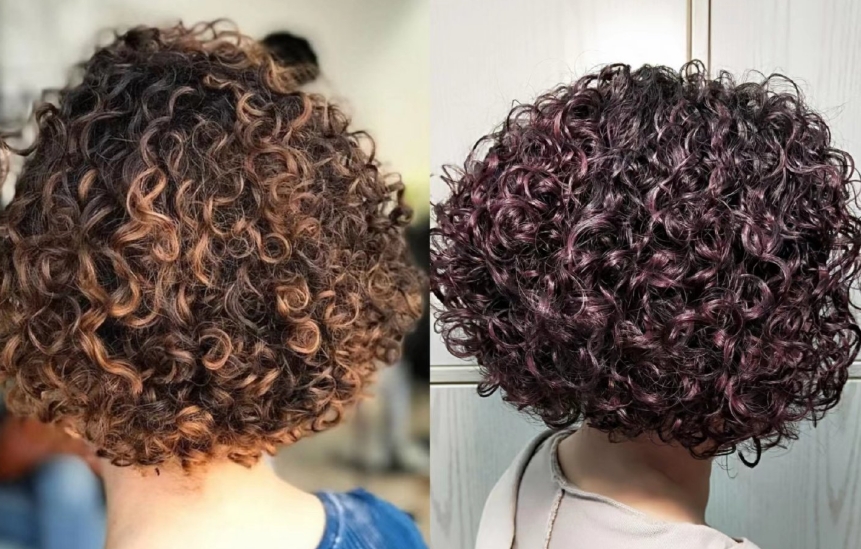
Conclusion: Perming is a one-time, permanent damage . It fundamentally alters the hair’s internal structure through chemical reactions. If performed improperly, such as leaving softener on for too long or not styling thoroughly, hair can be irreversibly damaged, becoming dry, straw-like, or even brittle. Furthermore, once a perm is damaged, the only thing you can do is wait for new hair to grow, which usually takes several months.
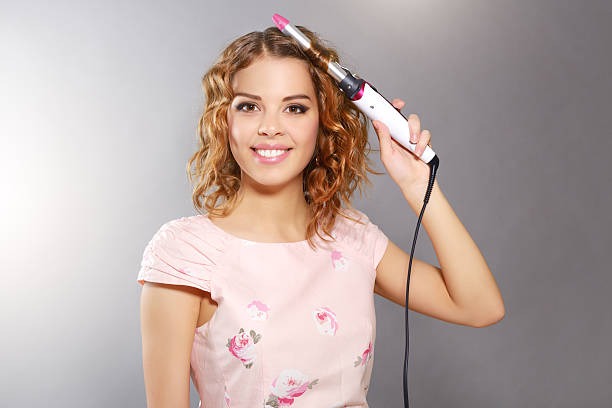
Who is more hurt?
Now, let’s compare the two damage methods together:
Curling irons: Damage is gradual and reversible . If you use them infrequently or with hair care products, hair damage can be controlled and repaired. But if you use a curling iron every one or two days, as many people do, the cumulative heat damage can make your hair very brittle.
Perming: The damage is one-time and irreversible . A successful perm can last for months, but a failed one can be devastating. It’s like a one-time gamble, placing the fate of your hair entirely in the hands of the barber’s technique and the quality of the chemicals used.
Therefore, from the perspective of risk control :
Curling irons are more like “small, high-frequency” investments. The risk is not high each time, but the total cost in the long run can be very high.
Perming your hair is more like a “large, low-frequency” investment. The risk is concentrated in one attempt, but if it fails, the loss will be huge.
For those who trust their hairdresser and don’t want to spend time styling their hair every day, perming is a more time-saving and labor-saving option. For those who like to try different styles, or are not confident in the hairdresser’s skills (fearing that “a perm will be wrong”), and prefer to take control of their hair, curling irons are a more flexible and safer tool.
Ending: Your hair, it’s up to you
Back to the original question: Which one is more harmful to hair?
The answer depends on your usage habits, the condition of your hair, and your tolerance for risk.
If you’re someone who changes up your hairstyle every few days, or you’re more of a do-it-yourselfer, a curling iron might be your go-to. But remember: invest in a high-quality curling iron with temperature control , and never forget to use heat protection spray . It’s like putting bulletproof vest on your hair, minimizing heat damage.
If you’re the type who seeks instant results and trusts your hairstylist, a perm can offer you lasting benefits. But before you make a decision, be sure to discuss your experience with your hairstylist to ensure they understand your hair type and needs.
Becoming beautiful is a process of understanding and pleasing yourself. Whichever method you choose should make you feel more confident, not more anxious. So, curling irons or perms? Which “beauty philosophy” do you prefer? Share your thoughts in the comments section.