Introduction: The ultimate fight against “collapsed top” and “frizzy hair”
If you’re like me, born with thin, fine, and slightly wavy hair, you know the frustration of feeling like your scalp is being sucked in. Straight hair simply flattens the top of your head, makes your hair look thinner, and makes your face look inexplicably larger. Waking up with hair that looks like it’s been electrocuted is a common occurrence.
After repeated straightening and perming, my hair became increasingly frizzy and dry. I realized it was time to stop this endless “chemical war.” So, I turned to physical styling tools— curling irons . Not only did it make my hair look thicker, but it also allowed me to experience a fresh, vibrant look every day.
This article will be a summary of my years of experience using curling irons as a “bald girl.” I will share my journey into the field and how to choose and use the right curling tools. I hope my experience can help you who are also troubled by your hairstyle.
Curling Irons vs. Perms: The Harm Debate
When I first started using curling irons, I was confused: which is more damaging to my hair, perming or curling irons?
After some research, I came to the conclusion that there is actually no comparison between the two.
Perming : A permanent hair treatment that uses chemicals to change the hair’s internal structure. The degree of damage depends on the quality of the chemicals and the hairstylist’s skills.
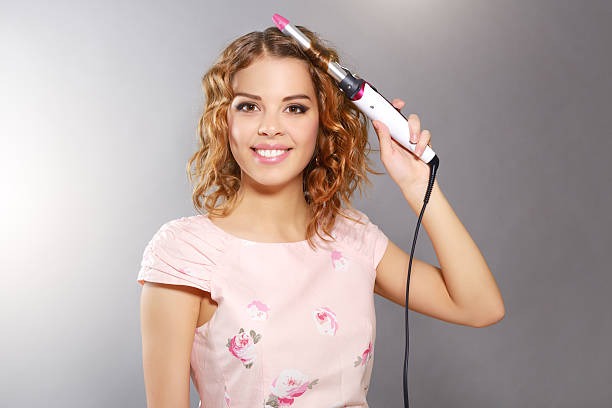
Curling iron : A tool that uses physical heat to temporarily shape hair. The degree of damage it causes depends on your control of temperature and operating skills.
Personally, I prefer curling irons. While perms can last a long time, once they’re applied, they’re difficult to restyle. They also tend to tangle more easily, and after a while, the desired curls become loose and shapeless. Curling irons, on the other hand, offer me more freedom: with the right tools, temperature, and technique, I can create a new look every day with minimal damage.
Curling iron selection guide: beginners, start with “cylindrical”
If you are a “hand-clumsy party” like me, then the following purchase points can help you avoid detours:
1. Shape and diameter: Find your perfect curling iron
Cylindrical curling iron : This is the most classic and versatile curling tool, perfect for beginners. If you don’t pursue too complicated styles, a straightening iron can also meet your daily needs.
Diameter selection : The diameter of the curling iron directly determines the curvature of the curls. Generally speaking:
Short hair (above the collarbone): It is recommended to choose a diameter of 22mm or smaller to create a fluffy feeling closer to “wool curls”.
Medium-length hair : The diameter of 25mm-32mm is a universal choice for medium-length hair, and can easily create elegant waves.
Long hair : A larger diameter of 38mm or above is more suitable for creating natural and romantic “big waves”.
2. Material and function: not only for styling, but also for hair care
Choosing a good curling iron isn’t just about its styling abilities, but also its hair-care properties.
Material : Prefer ceramic or negative ion coated curling irons. These materials ensure even heat distribution, reduce hair damage, and effectively eliminate static electricity, making hair look smoother and more shiny.
Temperature control : Choose a curling iron with multiple temperature settings. Research shows that 185°C is the most suitable temperature for styling hair with minimal damage.
Safety and convenience : Choose curling irons with 360-degree swivel cords , automatic power off , and anti-scalding features . These thoughtful features can make your styling process safer and easier.
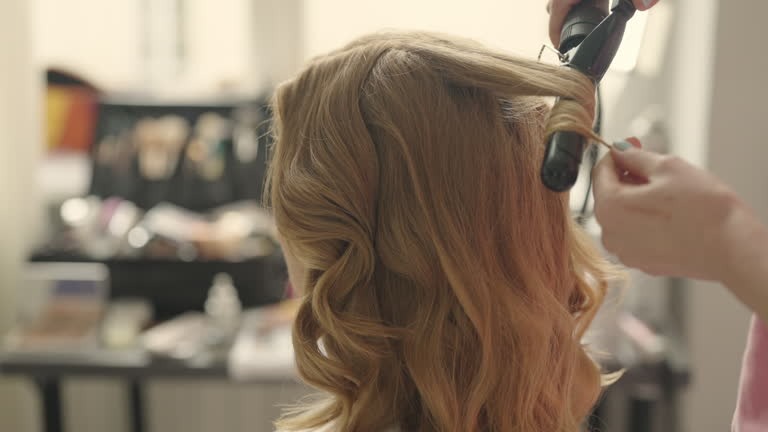
Personal recommendation: Those “magic” tools that saved me
I’ve tried countless curling tools throughout my long balding career. Here are my top recommendations:
ghd Platinum Curling and Straightening Iron : If you have the budget, this is a must-have. It features a 185°C intelligent constant temperature technology for fast heating, effective hair protection, and a hydrated, shiny curl.
The Philips Automatic Curling Iron is a boon for those with clumsy hands. It automatically controls the direction of curls, allowing even beginners to create perfectly symmetrical waves. Its burn-resistant design and automatic power-off feature ensure worry-free use.
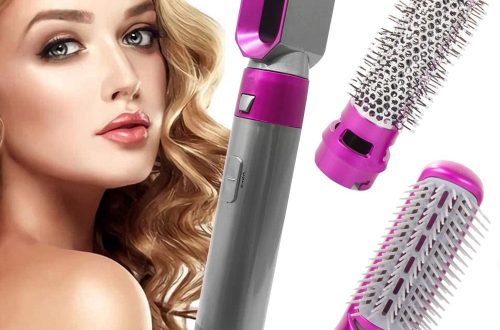
Multifunctional straightening comb : If you’re a lazy person like me and suffer from frizzy hair, a straightening comb is your lifesaver. It can straighten out messy hair in minutes, making it perfect for those mornings when you’re in a hurry.
Final advice for curling irons: blow dry first, then condition your hair
Before I wrap up this guide, I want to share a lesson I learned the hard way:
Never use a curling iron when your hair is wet.
Even if some products claim to be suitable for wet or dry use, high temperatures can be extremely damaging to wet hair. Before styling, be sure to blow-dry your hair thoroughly and always apply a conditioning oil . This oil creates a protective film that effectively protects against heat damage. Remember to blow-dry your hair in the direction of the hair cuticle, from roots to tips. This will help your hair become smoother as you blow.
Healthy, smooth, and beautiful hair can be a real bonus for your image. As a bald woman myself, I understand the importance of hair. I hope my experience can help you find the curling tools that work best for you and say goodbye to volume anxiety.